Croatia: The Life You Buy — Legal Facts & Local Rhythms
A lifestyle-first look at buying in Croatia: how daily rhythms, seasonal life and legal realities (EU parity, ministerial consent, rising house prices) should shape your choice.
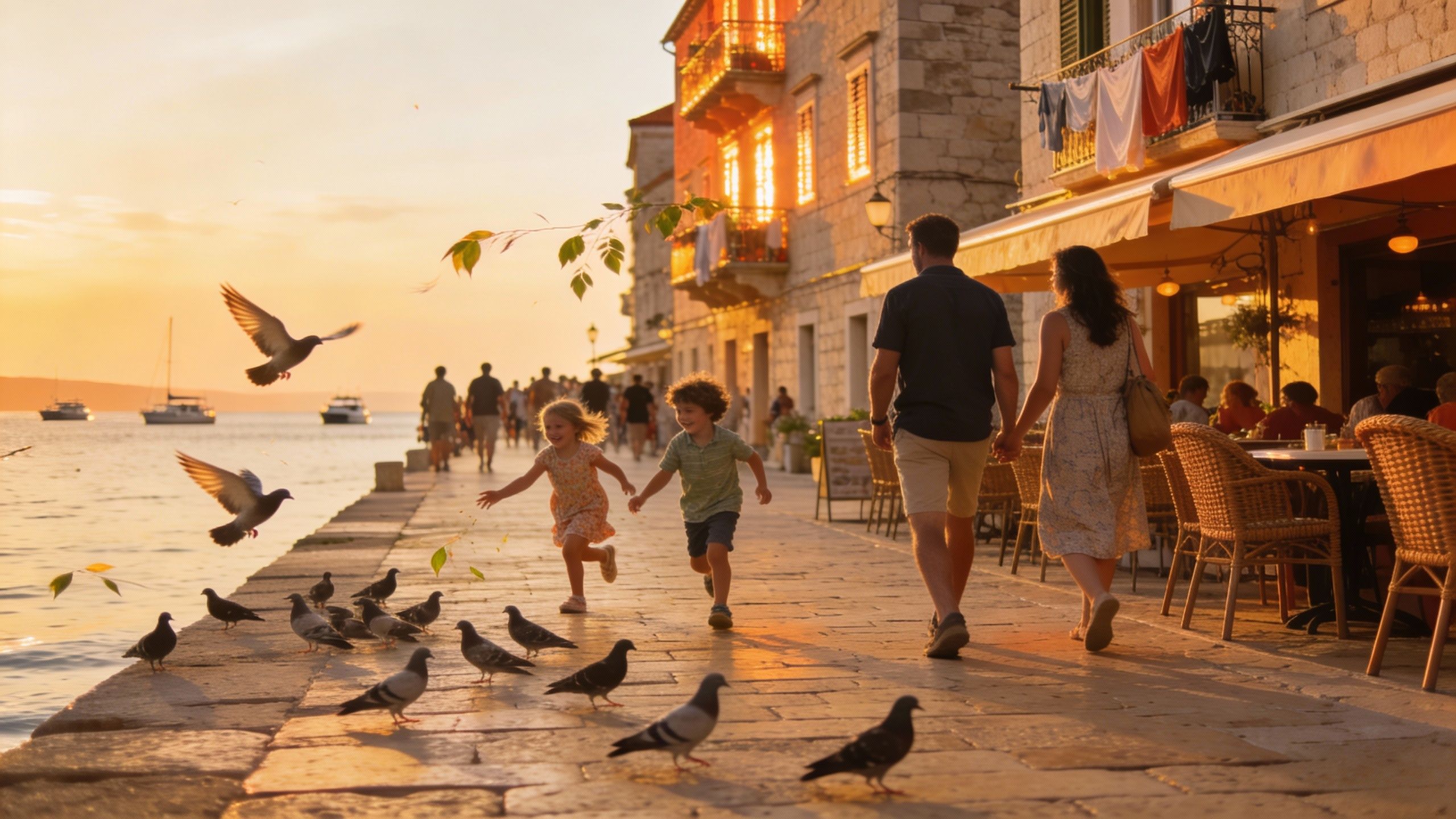
Imagine waking to the smell of freshly baked kifli as fishermen mend nets beneath timeworn stone houses — that is a morning in coastal Dalmatia. In Croatia the day unfolds slowly: espresso at a sunlit konoba, markets full of figs and pršut, and a late afternoon that spills into piazzas where neighbors exchange news. For many international buyers this is the promise: lived-in historic rooms, terraced gardens and a rhythm shaped by sea and soil. Yet even as prices climb — and local policy shifts — the real decision is whether a place’s daily life matches the life you hope to lead.
Living Croatian Days: neighborhood textures and seasonal rhythms
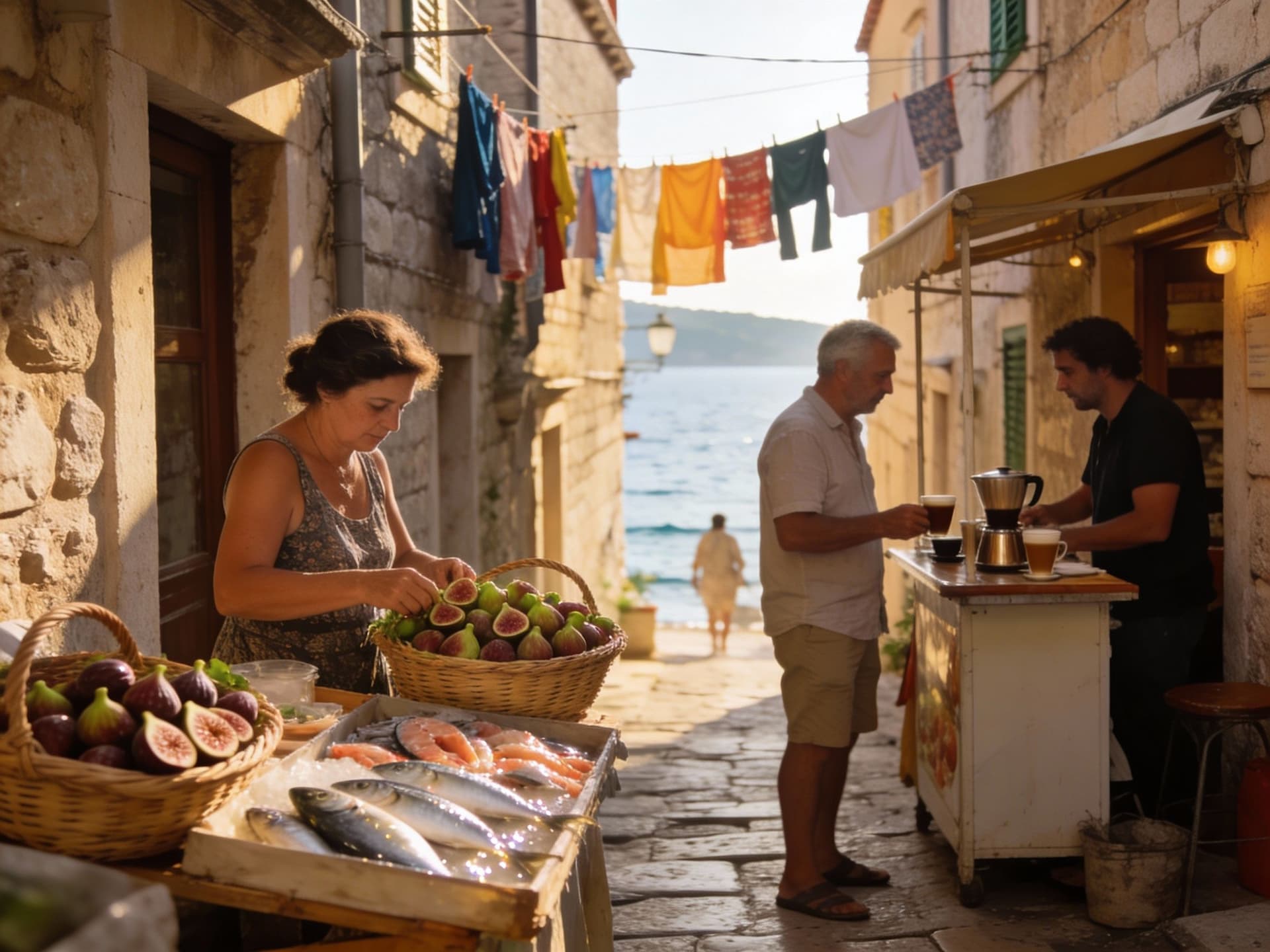
Croatia is a study in contrasts: Zagreb mornings hum with cafés on Tkalčićeva and design boutiques, while Split’s Riva hosts an unhurried parade of fishermen, joggers and aperitivo crowds. Along Istria’s coast the Italianate architecture and olive groves create a quieter, culinary-focused life, and the islands — Hvar, Brač, Vis — offer a slow tempo of terraces, vineyards and coves accessed by small ferries. Seasonal life matters: summer brings festivals and a bustle that can temporarily swell local services, while winter reveals quiet harbours and the true year-round community.
Zagreb, Split and the Adriatic: three very different mornings
In Zagreb you live among Austro‑Hungarian façades, small galleries and weekday markets; streets like Vlaška and the area around Britanski trg feel residential and quietly elegant. Split centres life along the Diocletian walls — properties on streets such as Marmontova transition from Roman thresholds to modern cafés, and terraces often look onto narrow lanes with lemon trees. On the Adriatic coast, places such as Rovinj’s old town or Opatija’s seafront promenades combine promenading culture with a pace that privileges outdoor living and long meals.
Food, markets and weekend ritual
Weekends in Croatia are often organized around the market: Dolac in Zagreb, Pazar in Split, or small island markets where fishermen arrive with the morning catch. Expect slow cups of coffee, sea salt on your jacket, and convivial dinners that run late; for many buyers the food scene is not an attraction but the fabric of daily life. This matters when choosing a property: proximity to a market or a favourite konoba can change how often you cook at home, whom you meet and how quickly you feel rooted.
- Market‑day rituals, island ferry schedules, morning and evening light, konobas with tables spilling into alleys, seasonal fruit stalls, coastal promenades for walking.
Making the move: practical considerations that protect the lifestyle

Falling in love with a street is only the first step; understanding who can legally own property and how tax policy affects long‑term life is the rest. Croatia’s rules distinguish EU (and EEA/Swiss) citizens from other nationalities; EU nationals generally enjoy parity with Croatians, while non‑EU buyers often require ministerial consent and reciprocity checks. Practical clarity at the outset — and early engagement with a notary and a local lawyer — prevents dream‑home heartbreak.
Who may buy: EU parity and reciprocity for others
If you are an EU, EEA or Swiss citizen, purchase rights are broadly the same as for Croatians, though agricultural land follows special rules. Non‑EU nationals need consent from the Ministry of Justice under a reciprocity principle that has evolved since 2006. This administrative step is usually straightforward when reciprocity exists, but processing times and documentation can be unpredictable — a detail that can delay a deposit or a closing if not anticipated.
Property types and how they shape daily life
A stone house on Brač with a south‑facing terrace offers sun and sea breezes but often requires restoration and attention to humidity. A modern apartment in Zagreb’s Donji grad provides proximity to galleries and international schools, while a renovated villa near Opatija prioritises sheltered gardens and year‑round access to services. Understanding whether you want an authentic restoration (greater character, more stewardship) or a contemporary apartment (lower maintenance, immediate convenience) shapes taxes, insurance and financing.
- Engage a local notary early to confirm title and encumbrances; commission a structural survey that includes damp and seismic checks; verify utility connections and coastal zoning if buying near the shore; clarify VAT and transfer tax implications with your accountant; confirm reciprocity/consent requirements if you are a non‑EU national.
Insider knowledge: what expats wish they’d known
Prices have been rising: the Croatian House Price Index recorded double‑digit annual gains in recent quarters, driven by city demand and coastal second‑home interest. At the same time the government has signalled tax reforms aimed at shifting the burden towards property and away from labour — a move that could affect holding costs and short‑term rental economics. Smart buyers consider how a purchase behaves in both peak and quiet seasons, and whether the property will be a lived home or a market asset.
Cultural integration and daily practicalities
Croatians prize hospitality and continuity; introductions through neighbours, market sellers and local artisans often unlock services and friendships more readily than formal channels. Learning basic Croatian phrases and attending seasonal events — olive harvests in Istria, klapa singing on the coast — accelerates belonging. Practically, securing local utilities, understanding municipal maintenance schedules and joining a local association (e.g. a homeowners’ board) smooths everyday life.
Long‑term stewardship: what to plan for
Beyond the purchase, stewardship matters: stone walls need repointing, limewash requires periodic renewal, and coastal exposure accelerates metal corrosion. Budget for ongoing conservation, local taxes and insurance that covers seismic damage in some regions. If you intend to rent seasonally, register appropriately and plan for property management that respects local neighbours and regulations — an approach that preserves value and the life you bought into.
- Survey, title search, ministerial consent (when required), costed restoration plan, local tax/insurance review, seasonal management plan.
Croatia rewards those who buy for life rather than for a headline yield. If you imagine evening light over a bay, neighbours who know your name and a small kitchen garden, begin with neighbourhood visits in different seasons, engage a Croatian lawyer and notary immediately, and read the HPI and government guidance linked above. An experienced local agency will connect you to artisans, notaries and accountants — the people who transform a house into the everyday you sought.
Having moved from Stockholm to Marbella in 2018, I help Scandinavian buyers navigate Spanish property law, restoration quality, and value through authentic provenance.