Imagine waking to the clipped bell of a Valletta church, then walking five minutes to a neighbourhood café where English and Maltese spill into conversation. That compact intimacy—stone streets, small piazzas, a sense of provenance—defines life in Malta. It also shapes where seasoned buyers look: not only at sea views and penthouse terraces, but at quiet lanes, old industrial plots and village cores that promise steady demand and cultural depth. Recent national indices show continued price momentum, a reminder that lifestyle and market realities move in parallel.
Living the Malta lifestyle
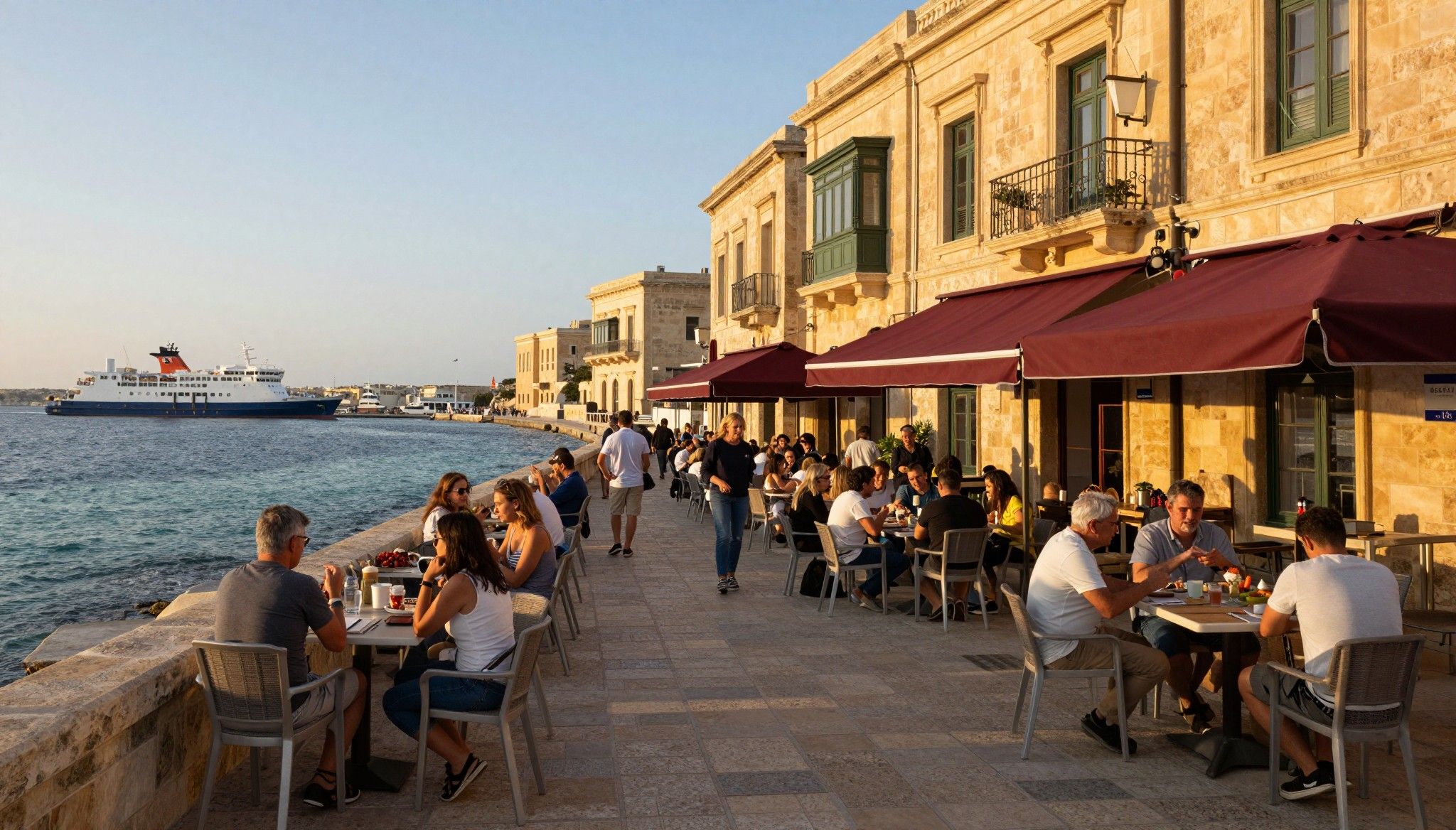
Daylight in Malta is territorial: mornings belong to espresso at café counters, afternoons to siesta on shaded balconies, evenings to long dinners under low-hanging bougainvillea. The island condenses urban variety into short distances—Valletta’s baroque geometry, Sliema’s promenade, Mdina’s hush, the fishing piers of Marsaxlokk. These rhythms inform how you live and which property types keep value: compact historic homes for cultural immersion, maisonettes with private courtyards for family life, and reworked warehouses for collectors who prize provenance and volume.
Valletta, The Silent Grandeur
Picture stone-flagged streets where palazzos stand shoulder to shoulder, their timber balconies shading narrow lanes. Valletta is compact, ceremonial and best appreciated by those who prize history as everyday scenery. For buyers, apartments here are intimate investments: lower turnover, tourism-season rental potential, and a premium for well-preserved architectural detail such as limestone cornices and intact timber sash windows.
St Julian’s & Sliema: Social Pulse with Practical Trade-offs
If you prefer lively terraces, contemporary dining and a strong expat community, St Julian’s and adjacent Sliema deliver. Here the cost of convenience is noise and denser construction; the reward is walkability, international schools nearby and clear short‑let demand. Buyers should weigh immediate lifestyle—cafés on Spinola Bay, evening promenades—against longer-term stewardship needs: soundproofing, communal upkeep and resonance with local planning controls.
- Lifestyle highlights and where to experience them • Morning espresso at Pjazza Teatru Rjal, Valletta • Fishermen’s market and lamp-lit dinners, Marsaxlokk • Promenade walks and boutique shopping, Sliema Strand • Quiet gardens and baroque façades, Mdina’s bastions • Sunset Aperitivo on Spinola Bay, St Julian’s
Making the move: practical considerations
Lifestyle compels the search; data compels prudence. Malta’s Residential Property Price Index has recorded steady annual gains in recent quarters, reflecting constrained land supply and persistent demand. That backdrop means buyers should treat location discipline as a material part of their strategy: consider micro‑neighbourhood dynamics, legal entitlements for non‑nationals, and the aperture for sympathetic restoration versus speculative rework.
Property styles and how they shape daily life
A traditional Maltese maisonette offers courtyard living and passive cooling, ideal for family life and late evenings outdoors. Penthouse apartments grant light and views but often demand higher maintenance and stricter planning oversight. Converted industrial spaces—once the preserve of creatives—now attract buyers seeking volume, natural light and the possibility of a discreet home office. Align the floorplate with how you intend to live: storage, outdoor access, and room proportions matter more here than an extra en-suite.
Working with local experts who know the island
- Steps to blend lifestyle and prudence 1. Commission a neighbourhood survey—ask about street-level turnover, recent restorations and noise at different times of day. 2. Insist on a title search and planning-history review to reveal permitted uses and any conservation overlays. 3. Request measured drawings and a fabric report for older stone buildings to estimate restoration budgets. 4. Meet a local property manager to understand seasonal rental rhythms and service‑charge expectations. 5. Reserve time to live in the neighbourhood for several weeks before committing to a purchase.
Insider knowledge: what expats wish they'd known
Expat stories often share a common refrain: Malta is smaller and louder than the brochures imply. Neighbourhood character can change street by street—what feels secluded at noon may hum with nightlife after sunset. Many buyers underestimate ongoing running costs in older properties: limewash, lead‑work, and specialised joinery require artisan care. That said, those willing to steward heritage find communities that reward patience and an appetite for authentic repair.
Cultural integration, language and social fabric
English is widely spoken, easing administrative and social transition. Still, local customs—neighbourhood fêtes, church processions, and a more deliberative pace—shape daily life. Showing respect for local rhythms, engaging with parish events and patronising family bakeries are small gestures that unlock deeper community access. Many long-term residents recommend learning a few Maltese phrases; the effort is always returned in warmth.
Long-term lifestyle and stewardship
If your intent is legacy—house to pass through generations—prioritise construction quality, original fabric and a location with civic depth rather than transient amenity. Recent commentary highlights how land scarcity and central demand have amplified value in established cores; prudent buyers therefore privilege provenance and conservation potential over fashionable but fleeting trends.
- Red flags and practical checks • Rapid price spikes on a single street—ask what changed and why. • Unresolved planning disputes or retrofit works without permits. • Buildings with recurring damp or structural patches—commission a fabric survey. • Overreliance on short‑let income projections in neighbourhoods where regulation may tighten. • Service charges that lack transparent accounting or sinking‑fund contributions.
Malta is a subtle proposition: its virtues are intimacy, provenance and a temperate Mediterranean life. For the international buyer who values architectural integrity and cultural texture, the island offers a compact portfolio of lifestyle choices—each with its own trade-offs. Start by living in the neighbourhood, commission local expertise that respects craft, and treat purchase as the first act of stewardship. When those elements align, you buy not only a home but a way of life.
If you find yourself wanting a property that feels lived‑in and rooted, reach out to an agency that understands Malta’s layered streets and conservation values. A local advisor will help you translate daily desires into precise property questions, arrange measured visits and secure the reports that make confident offers possible.