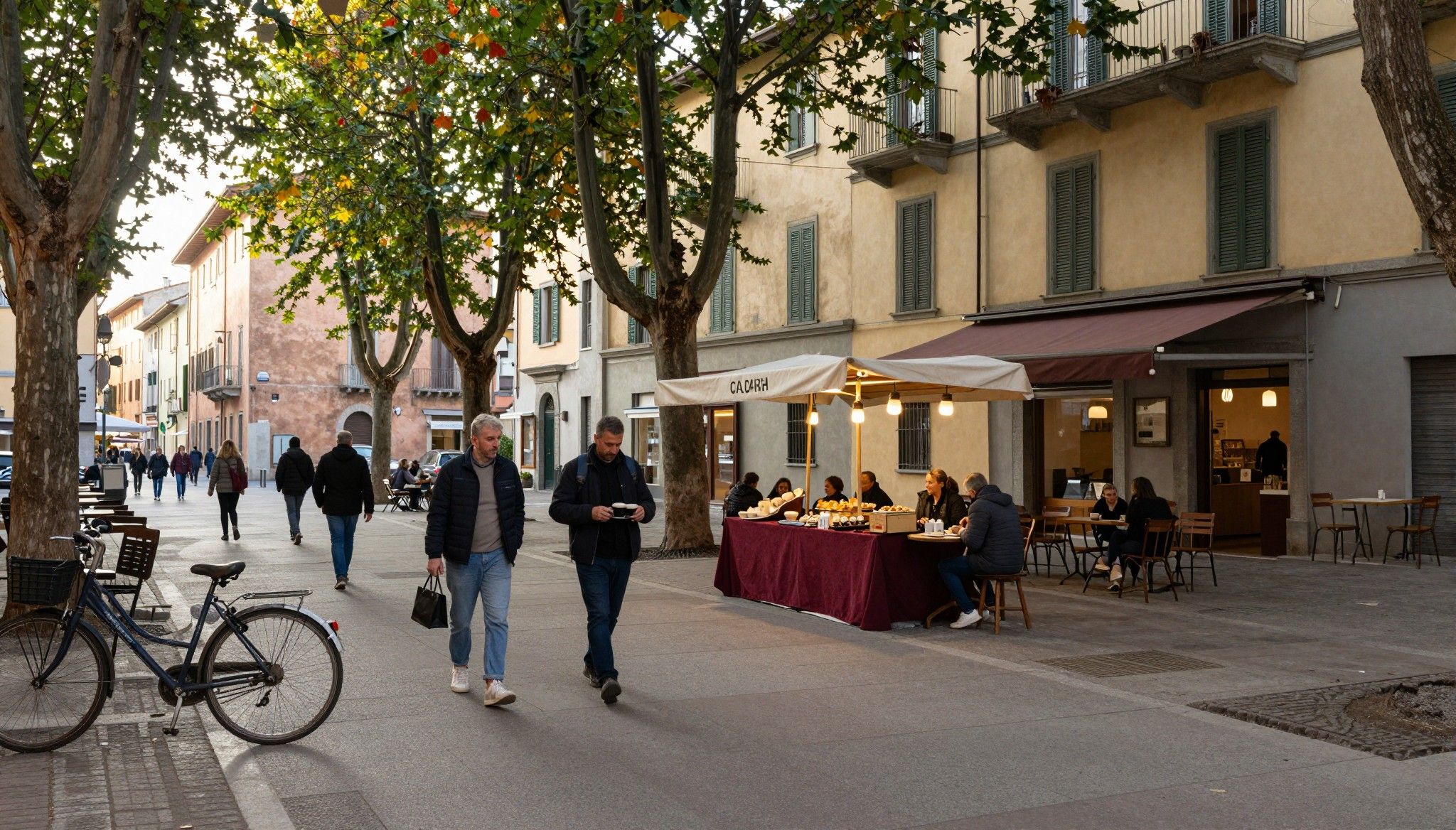
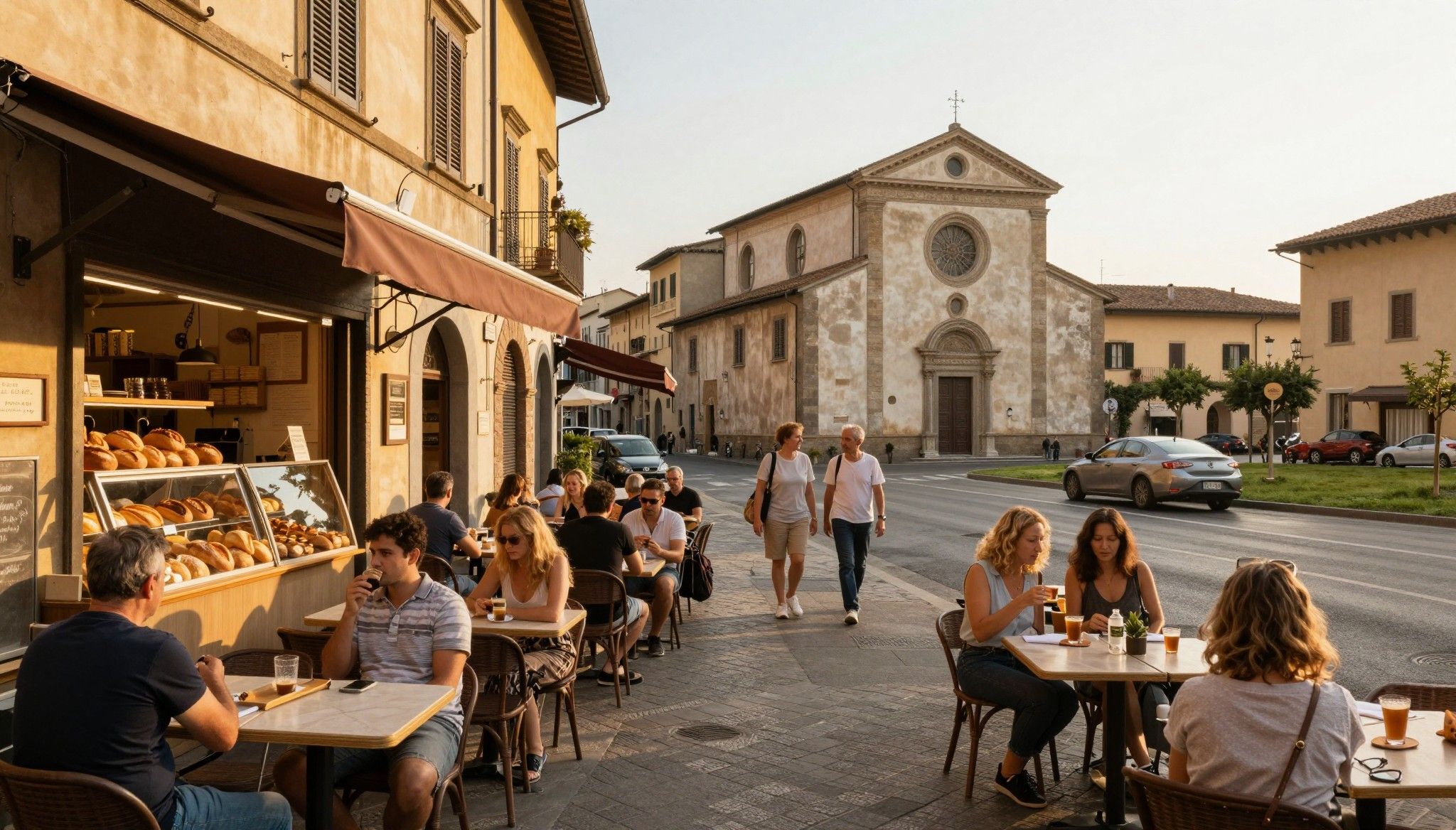
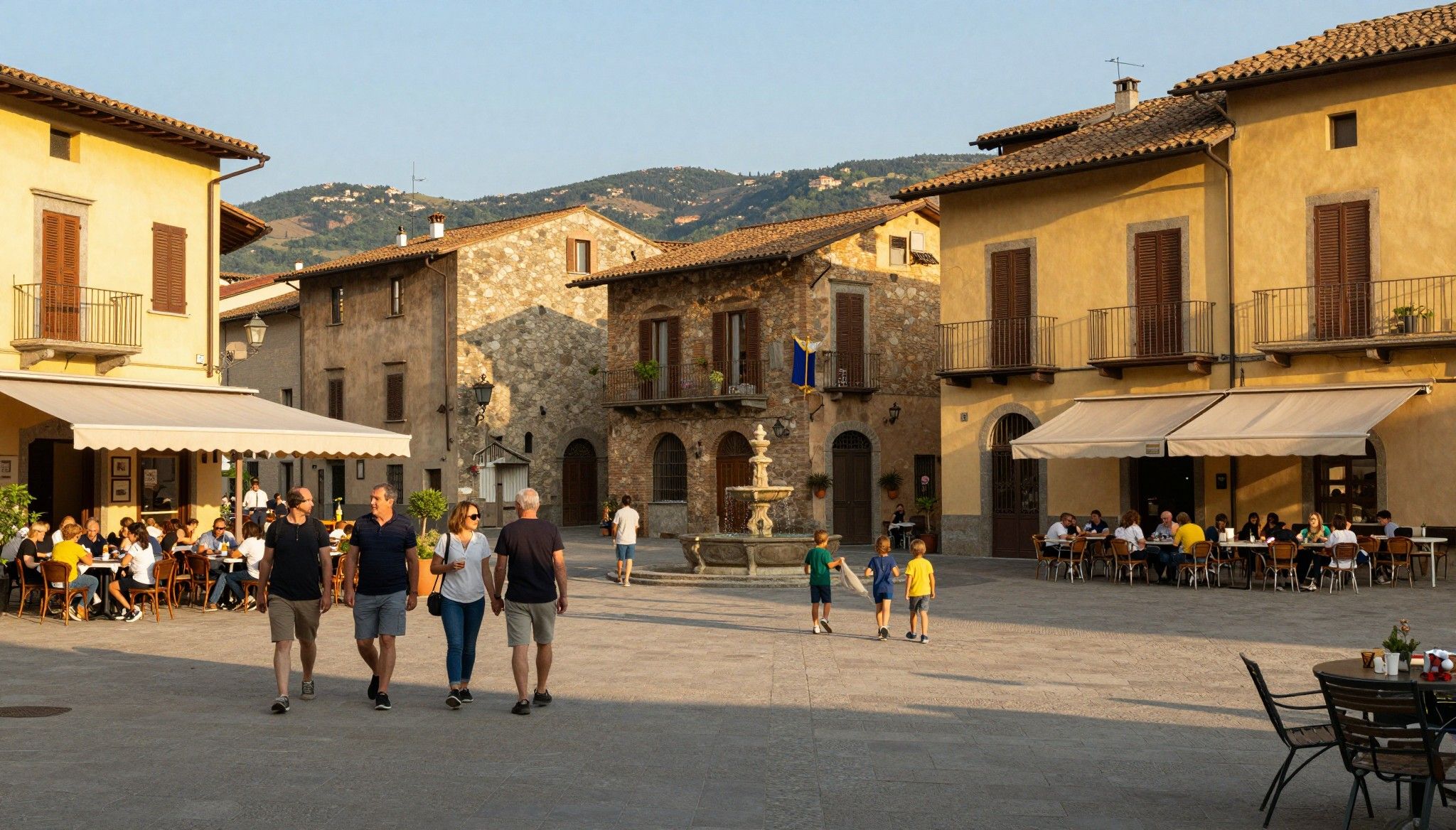
Imagine an early morning in Parma: cappuccino steamed by a barista who knows your name, a neighbourhood market where the porcini seller folds your mushrooms in paper, and a narrow street where an 18th‑century palazzo keeps its shutters closed until the sun warms the stone. That quiet domestic theatre is what many international buyers picture when they think of Italy, yet it is rarely the image used to sell properties. Recent reporting shows investor interest remains high despite headline risks, which makes discerning where daily life is actually lived essential for anyone buying here. For this reason, we compare lived‑in neighbourhoods — the calm cores that outlive coastal showmanship — and the practical implications for purchase and stewardship.
Living the Italian lifestyle
Daily life in Italy is composed of modest rituals: a mid‑morning espresso, a slow market run for vegetables, an aperitivo at dusk followed by an unhurried walk home. In historic centres from Parma’s Oltretorrente to Palermo’s Albergheria, these rituals are tied to streets and small squares rather than panoramic vistas. National statistics show house prices have risen unevenly through 2025, which underlines how micro‑locations — a single street or block — determine both price movement and quality of life. Knowing where locals actually live and where visitors stay is therefore a practical concern, not mere aesthetic preference.
Neighborhood spotlight: Oltrarno, Florence — lived craftsmanship
Walk the Oltrarno at dawn and you will find workshops opening, a repairman re‑oiling a bicycle chain, and a trattoria arranging morning deliveries of pecorino. This quarter still supports small artisanal businesses and narrow, liveable streets that reward restoration over replacement. For buyers seeking an authentic Italian life, properties here offer proportions, rooftop terraces and courtyards that translate to daily pleasure; for investors they imply resilience because residents value longevity and upkeep. Yet these advantages come with practicalities — careful checks on historic‑building restrictions, ventilation, and utility upgrades are non‑negotiable during purchase.
Food, markets and social rhythm: Piazzas that anchor life
A neighbourhood’s piazza and weekly market do more to shape daily life than sea views. From the Mercato di San Lorenzo in Florence to Turin’s Porta Palazzo, markets define food habits, social networks and convenience. Properties within a short walk of these nodes tend to command steadier demand because they supply everyday life rather than episodic tourism. For the buyer, proximity to a market often matters more than an extra bedroom: it reduces living costs, improves resale appeal, and fosters immediate community integration.
Lifestyle highlights — small‑scale pleasures that matter
Morning espresso at Caffè Pasticceria San Daniele (Trieste) and weekday produce from the Mercato Coperto
Saturday vinerias in Bologna’s Quadrilatero and family dinners on a narrow terrace
Sunset passeggiata along Genoa’s historic Via Garibaldi, where courtyards keep a cool evening hush
Making the move: practical considerations
Romance meets regulation when procuring an Italian home: the building’s provenance, energy class, and local planning rules dictate what you can and cannot do. Recent national data demonstrate modest, regionally varied price growth through 2025, which makes timing and specificity more important than market timing. A clear practical principle: buy the street you love, not the view tourists photograph. That principle reframes the search, and it changes the experts you will want on your team.
Property types and how they shape daily life
A restored apartment in a palazzo provides scale, high ceilings and thick walls that keep summers calm and winters quiet; a farmhouse (casa colonica) brings land, productive gardens and a different maintenance profile. New‑builds offer efficiency and warranties but often lack the patina and proportion that lend Italian homes their temperament. Match property type to how you intend to live: frequent visits favour low‑maintenance flats near services; year‑round residency benefits from properties with insulation, heating upgrades and well‑appointed kitchens.
Working with local experts who know where life happens
An agent rooted in a neighbourhood will direct you to streets where families have lived for generations, to owners who value discreet transactions and to craftsmen who understand historic detail. Lawyers (notaio‑connected solicitors) familiar with local cadastral anomalies and surveyors who read old construction drawings are indispensable. Choose professionals who speak to stewardship — restoration quality, compliance with Soprintendenza (where applicable), and long‑term maintenance plans — rather than those offering quick flip metrics.
Practical steps that preserve lifestyle value
Commission a heritage‑sensitive survey and confirm any constraints with the local Soprintendenza before making an offer.
Verify energy class and obtain realistic renovation quotes that include masonry, plumbing and heritage carpentry.
Ask your agent for a neighbourhood history: long‑standing ownership patterns, recent conversions, and true pedestrian traffic at different times.
Insider knowledge: what expats wish they’d known
Expat experience in Italy often begins with surprise: the rhythms of bureaucracy, the importance of neighbourly relations, and the unevenness of services between city wards. Many newcomers underestimate the social value of nearby artisans, the practical advantage of a piazza with benches, or the benefit of an off‑peak market run that keeps living costs down. Those everyday things, not headline rents, determine whether a property will feel like home within a year.
Language, rituals and social integration
Learning basic Italian phrases changes more than conversation; it opens local networks. Neighbours will forgive small administrative errors but not indifference. Joining market vendors, supporting a local cooperativa or frequenting the same bar creates social capital that smooths practical life — from heating repairs to trusted babysitters. Consider this social currency when choosing a neighbourhood: a friendly street buys you time and abundance.
Long‑term stewardship: how life evolves
Properties purchased for their neighbourhood sense tend to appreciate reliably because they answer a human need that outlives fashions. Over a decade, maintenance, appropriate restorations and respectful updates to insulation and services will increase both comfort and capital value. Think like a steward: budget for a ten‑year maintenance plan, favour materials that age gracefully, and choose interventions that preserve scale and light.
If you are drawn to Italy’s romance, begin by choosing streets that sustain daily life. Data from national statistics confirm modest overall growth, but the greatest returns have been on properties embedded in everyday neighbourhood infrastructure. Meet local agents who can prove long‑term stewardship stories, review Istat neighbourhood trends, and plan renovations that respect provenance. In Italy, the life you buy is the best metric of value; approach purchase as place‑making rather than trophy acquisition.