When Malta’s Seaside Addresses Mislead — Where Value Hides
Malta’s charm masks sharp micro‑market differences: maisonettes and apartments lead price growth while yields vary widely. Pair lifestyle priorities with RPPI data and local expertise.
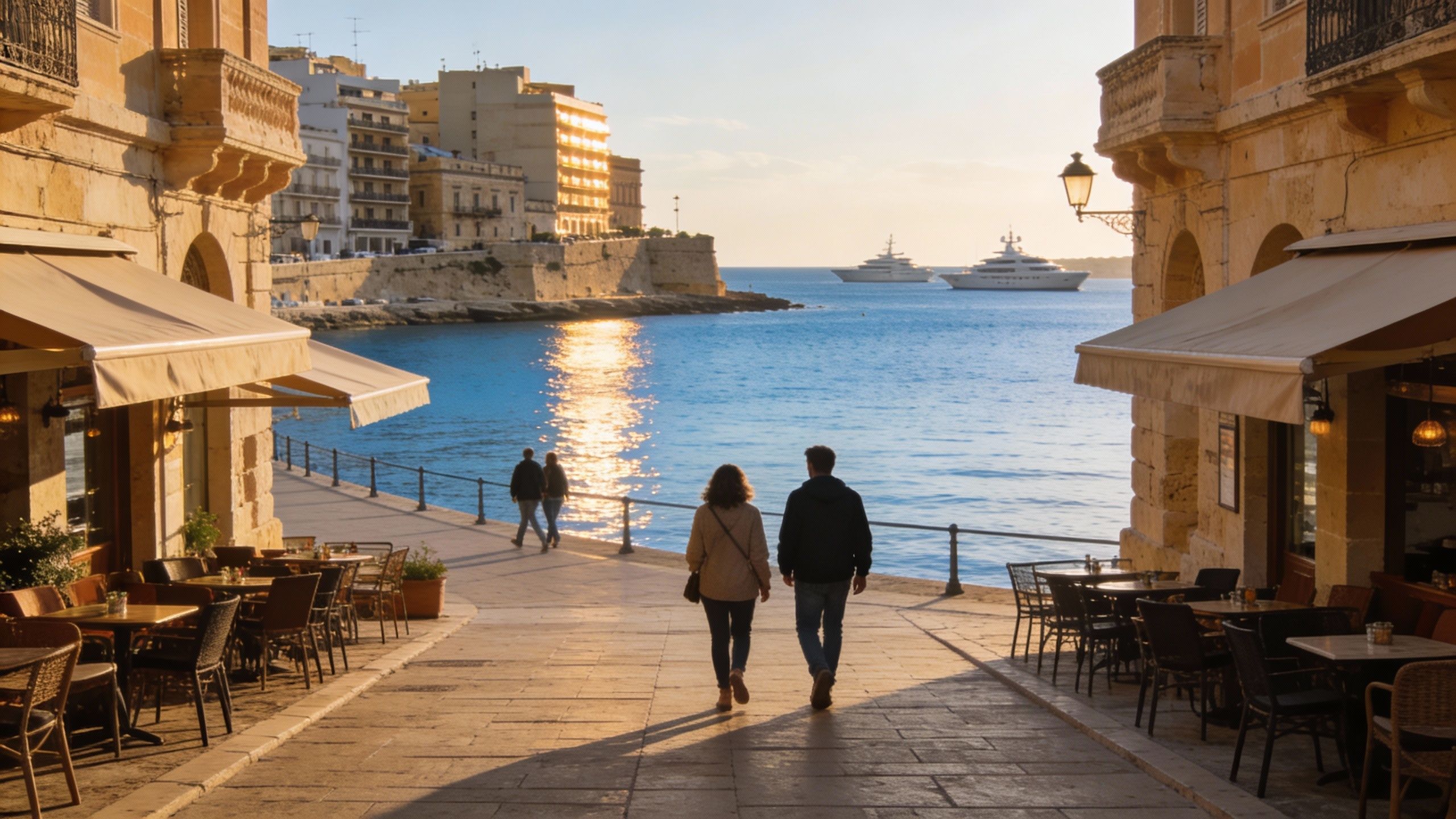
Imagine stepping out of a limestone mews in Valletta at dawn, espresso in hand, the harbour light silvering the water — and realising the address you coveted is more of a postcard than a daily life. Malta confounds expectations: narrow streets and grand facades seduce, yet value and everyday living often hide a few blocks away.
Living the Malta lifestyle

Malta is compact and improbably varied. Weekdays move at a polite pace — office mornings in Mriehel, café conversations in Sliema, market bargaining in Marsaxlokk — while evenings belong to terraces, neighbourhood restaurants and the slow, social ritual of aperitifs. Language is a convenience: English is official, Maltese colours conversation, and local warmth makes integration simpler than many expect.
Valletta, Senglea and the historic cores
Living in Valletta or the Three Cities places you among baroque stone, narrow paseos and cultural institutions. Mornings begin with pastry crumbs on corbelled balconies; Sundays are for long walks along the bastions. These addresses confer provenance and quiet prestige — but they also mean smaller floorplates, conservation constraints and a premium for every square metre.
Sliema, St Julian’s and coastal rhythms
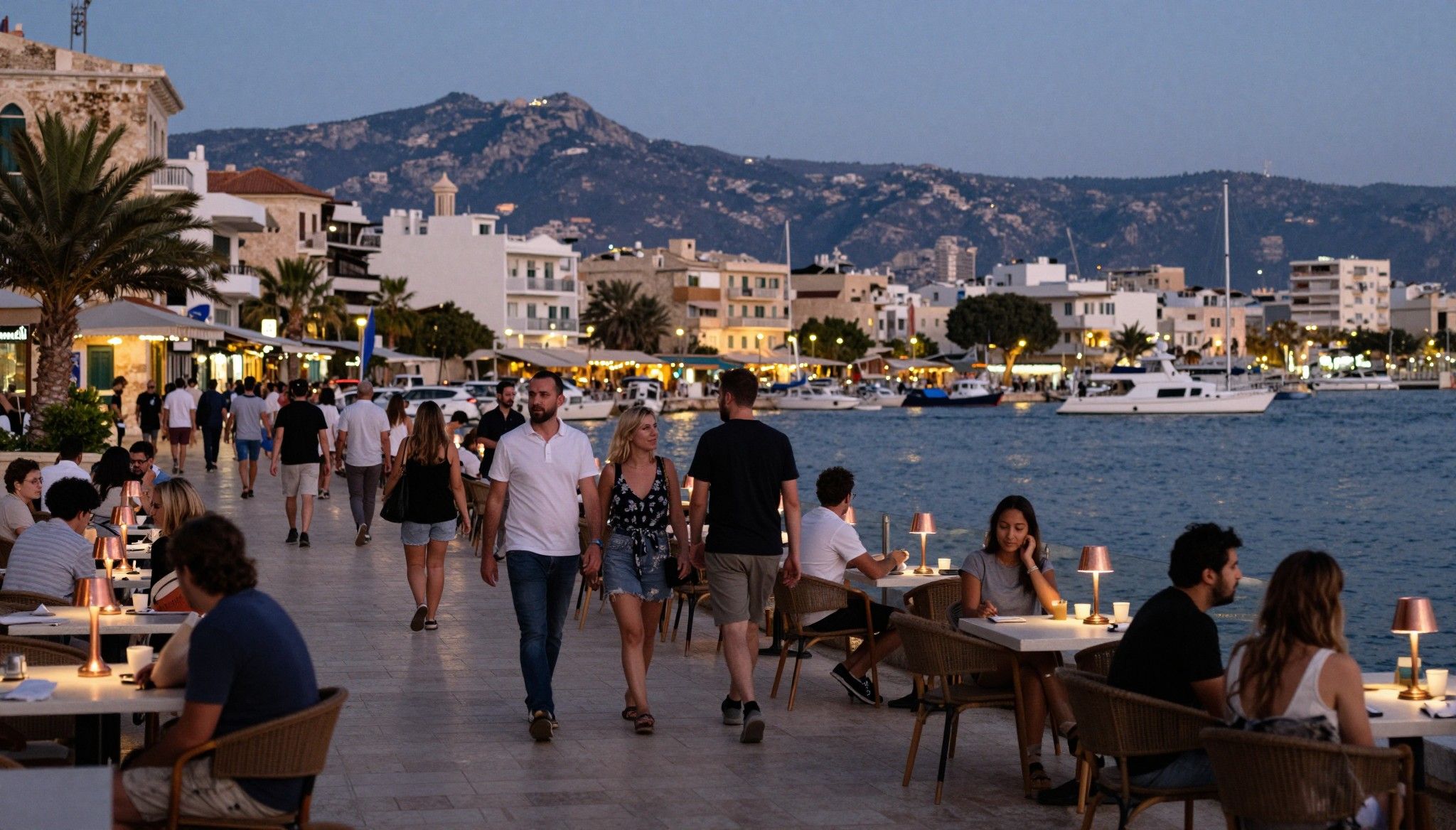
Along the Northern Harbour the rhythm is coastal: promenades, cafés that spill onto the pavement, and a late-afternoon drift toward the sea. These neighbourhoods suit those who prize convenience — shops, marinas, international schools — but they are also where headline prices and tourist short-lets press hardest on yields and day‑to‑day calm.
- Lifestyle highlights: Valletta bastions at sunrise; Marsaxlokk fish market Saturdays; a late café in Triq ir-Repubblika; a family picnic at Golden Bay; aperitifs on Sliema promenade; artisan workshops in Rabat.
Making the move: practical considerations
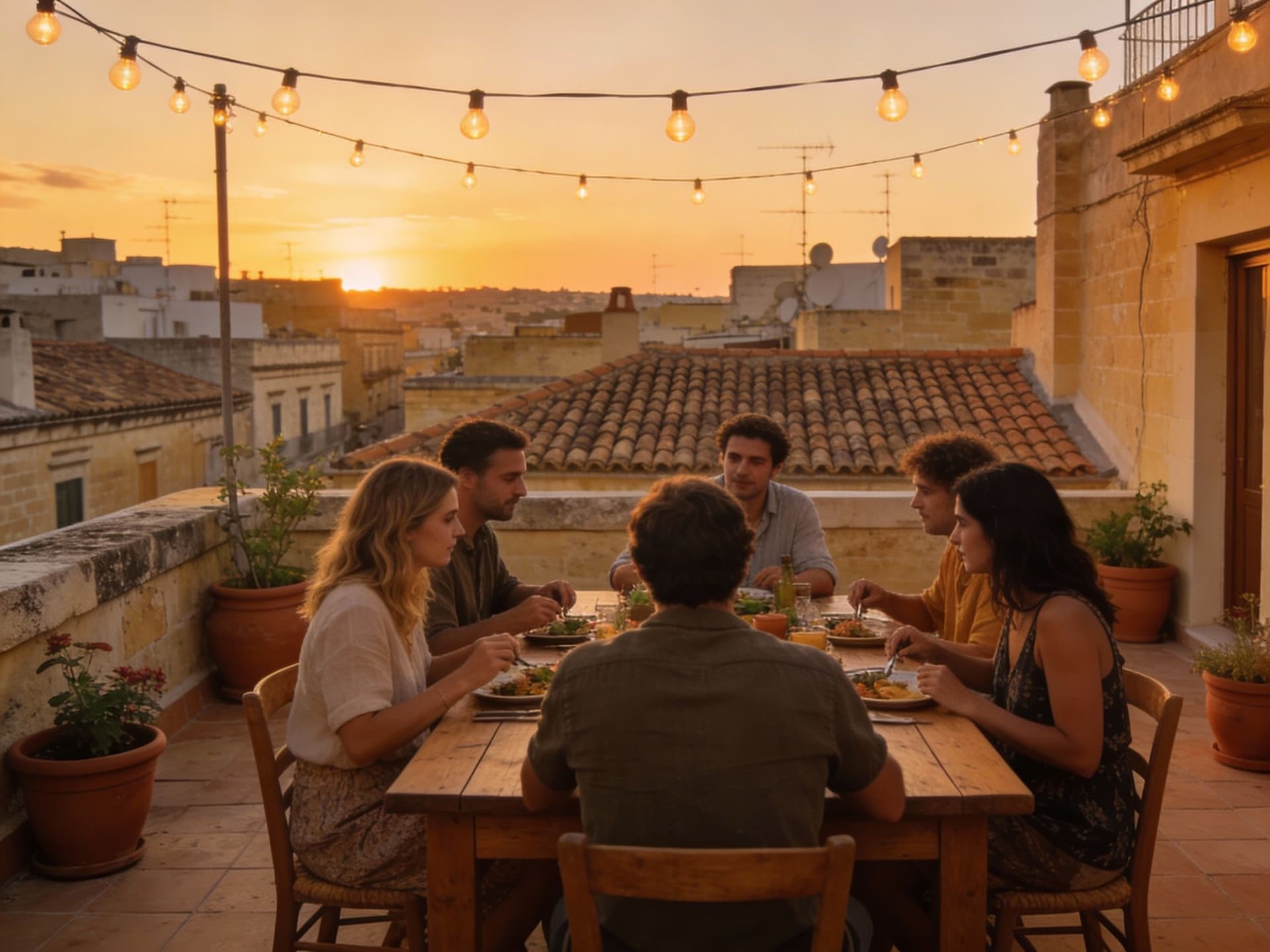
The market is not a monolith. Official statistics show price momentum — the NSO recorded mid‑2025 RPPI gains — but beneath those averages lie meaningful differences: maisonettes and central apartments have outpaced houses, and yields vary sharply by micro‑location. Treat lifestyle wishes and market data as equal partners when choosing a street, not just a town.
Property styles and how they shape daily life
Maltese maisonettes — with their internal courtyards and shuttered facades — offer tactile domesticity and indoor‑outdoor living. Modern apartments deliver convenience and rental appeal. Terraced townhouses in older cores require careful restoration but offer architectural provenance; they reward stewardship and, in the right location, solid capital growth.
Working with local experts who know the lifestyle
A Maltese agency should be discreet, well‑connected and conversant with conservation rules, short‑let demand and seasonal occupancy patterns. Expect them to translate lifestyle priorities into practical searches: which street keeps the afternoon breeze, which block has sympathetic neighbours, which property benefits from roof‑access or a modest courtyard.
- Steps to align lifestyle and market realities: 1) Map daily routines (schools, shops, commutes) before viewing, 2) Prioritise spaces you will use daily (kitchen, balcony, storage) over symbolic rooms, 3) Ask agencies about micro‑seasonality (tourist peaks that impact short‑lets), 4) Request recent utility and maintenance records, 5) Compare realistic rental yields against your financing plan.
Insider knowledge: what expats wish they'd known
Seasonality, neighbourhood microclimates and local customs matter more than many realise. An address that seems tranquil in winter can hum with tourists in July; a house with a south‑facing roof terrace is golden in autumn but stony-hot in August. Paying attention to rhythms — market days, festa schedules, ferry timetables — will change where you want to live.
Cultural integration and daily routines
Maltese society blends Mediterranean sociability with an easy English fluency. Neighbours are often family‑centred; small courtyards become gatherings. Learn a few Maltese phrases and attend a local festa and you will be invited to community life far sooner than you expect. That social capital eases everything from caretaking to recommended tradespeople.
Long‑term lifestyle and market durability
Expect the islands to reward stewardship. Properties with authentic materials, solid conservation work and thoughtful adaptations tend to retain value. Short‑term fashions — glass balustrades pasted onto limestone façades, ostentatious rooftop landscaping without proper waterproofing — are red flags for maintenance liabilities.
- Red flags local buyers point out: 1) New render over old stone without a warranty, 2) Roofs without recent membranes, 3) Properties in holiday zones over‑dependent on short‑lets, 4) Lack of documented renovations, 5) Noisy streets near ferry terminals at peak season.
- Practical ranking for investment-minded buyers: 1) Apartments in central and southern Malta for steady letting, 2) Gozo properties for higher yields but smaller markets, 3) Historic townhouses for long-term capital and lifestyle, 4) Northern Harbour luxury developments for prestige but lower gross yields.
A note on timing: why winter viewings reward patience
Winter offers quieter viewings, clearer negotiations and a truer sense of routine. Streets empty of tourists reveal the daily cadence — bakeries, school runs, deliveries — that defines neighbourhood fit. If lifestyle matters, visit in two seasons: a winter week and an early summer long weekend.
Conclusion: Malta rewards deliberate choices. Choose a street not a postcard; balance the romance of limestone and sea with maintenance realism and micro‑market data. Work with an agency that understands conservation, community rhythms and the distinction between a photo‑op and a place you will inhabit. Begin with a short reconnaissance visit in winter, return in summer to test the seasonal mood, and let local expertise translate a life imagined into a residence kept.
Having moved from Stockholm to Marbella in 2018, I help Scandinavian buyers navigate Spanish property law, restoration quality, and value through authentic provenance.