Where France’s Value Hides: Neighbourhoods, Not Headlines
Market stability in 2025 hides neighbourhood-level value: buy where daily life — markets, cafés, civic rhythms — aligns with long-term stewardship and provenance.
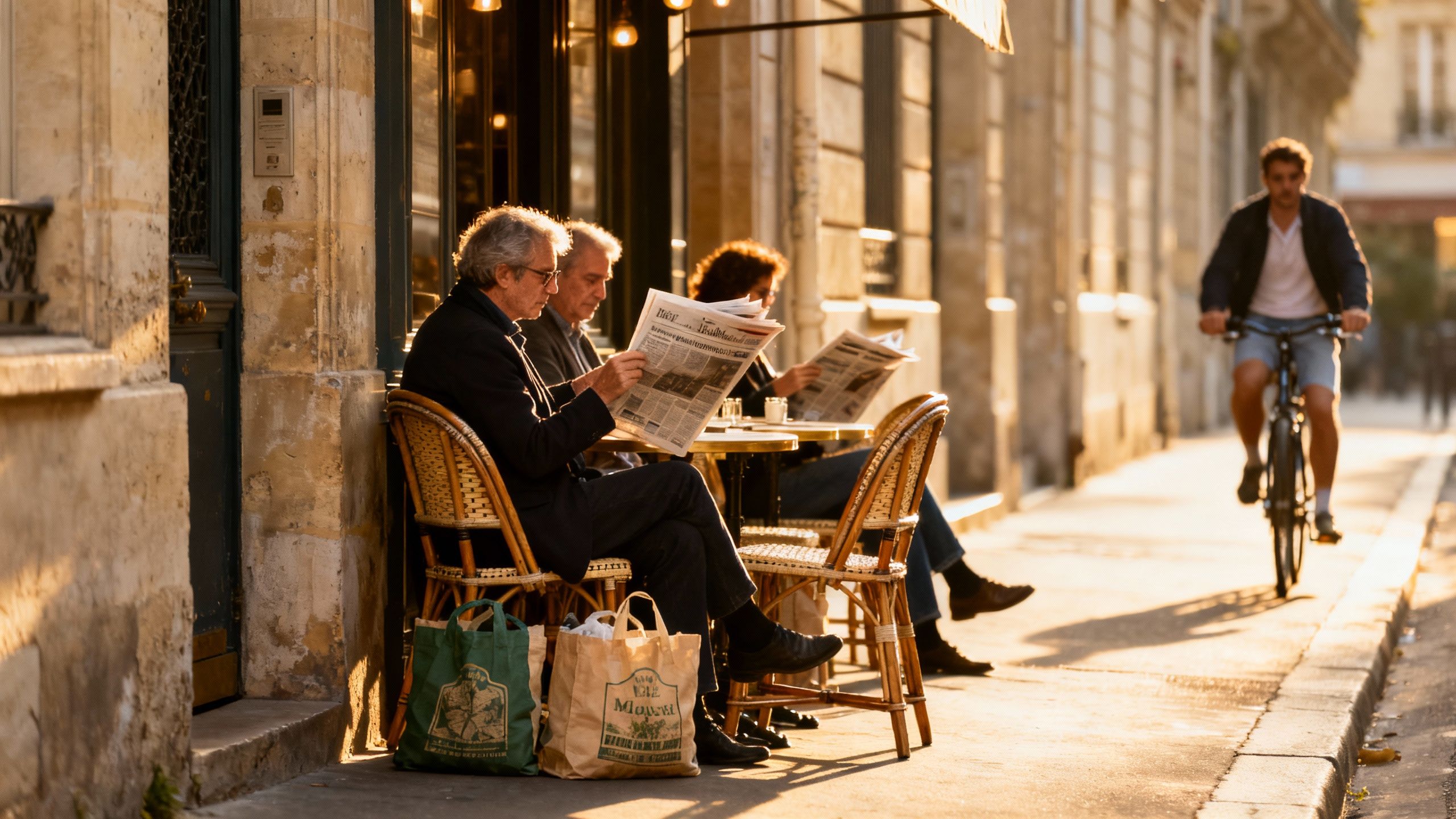
Imagine a late-summer morning on Rue Cler in Paris: boulangeries opening, market stalls arranging bouquets of basil and bunches of radishes, a cafe terrace where an English-language book lies beneath a cup of espresso. That quiet choreography — the market rhythms, the unhurried lunch, the ritual of aperitif — is what most international buyers buy into before they sign a contract. Yet the actual French property market has been quieter and more variable than the mythology suggests; recent official data show broad stabilisation and pockets of renewed growth. Understanding where that steadiness lives — in provincial towns, coastal communes, or particular Paris arrondissements — changes how you hunt and what you value.
Living the French life: more than a postcard
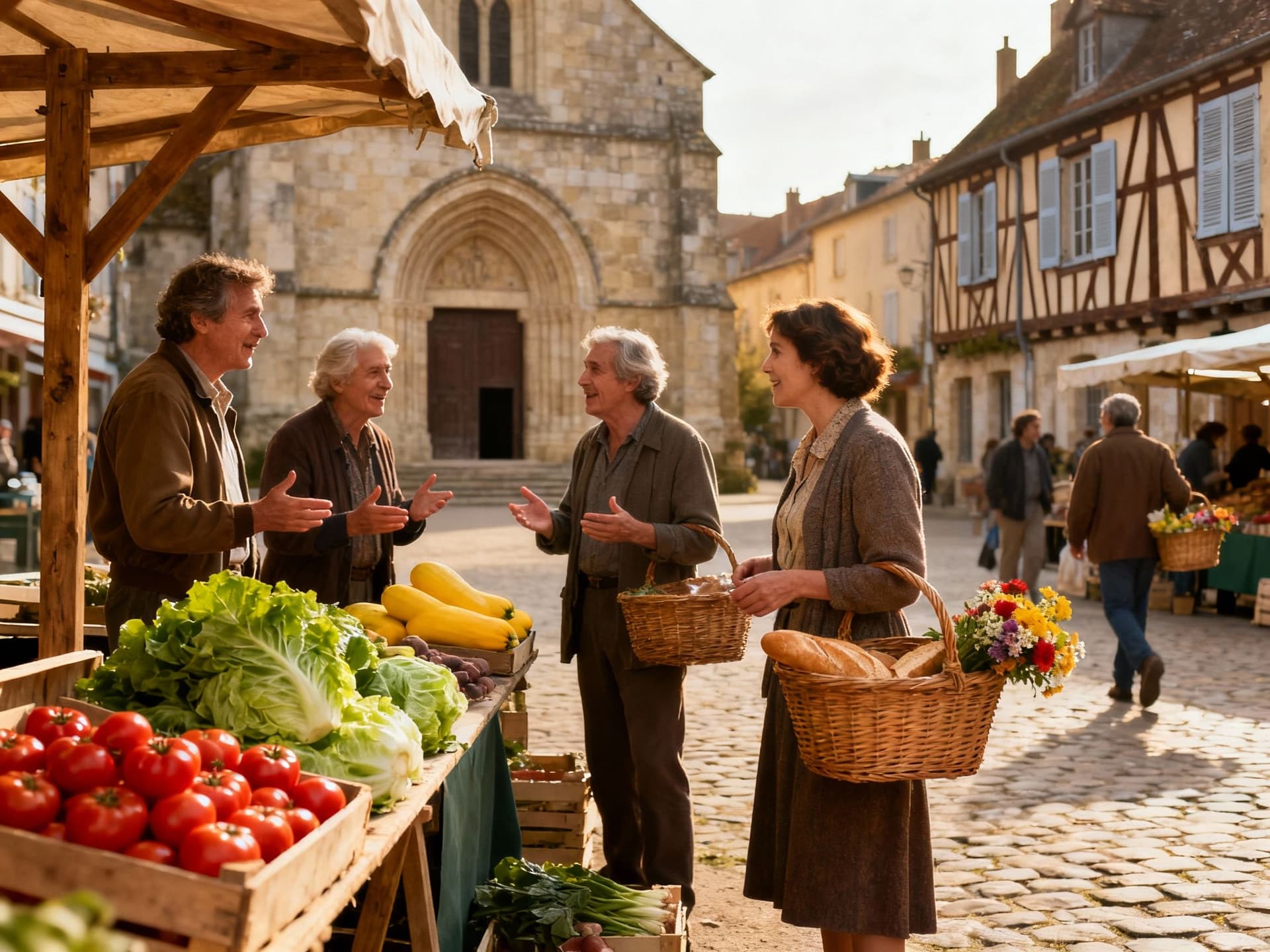
France is not a single lifestyle but a spectrum: the disciplined conviviality of Lyon’s traboules, the slow, sunlit days of the Languedoc coast, the formal ease of Bordeaux’s wine salons. Daily life is shaped by markets, neighbourhood cafes, municipal parks and the cadence of fêtes and markets that define public life. For a buyer, this means the purchase is as much about neighbourhood cadence as square metres — a Provençal lane with morning bread vans will shape your day more than an extra bedroom across the city.
Paris: arrondissement character over price per m²
Paris is a mosaic of distinct lives: the bookish calm of the 5th and 6th, the village intimacy of the 11th, the riverside clarity of the 7th. Rather than fixate on headline €/m², look at corner shops, morning light into the living room and proximity to a familiar marché — those determine whether you will truly live like a Parisean. Some previously overlooked arrondissements have quietly improved thanks to new boulangeries, small galleries and better transport connections, offering lifestyle upgrades without the usual price shock.
Provincial towns and coastlines: understated value
Beyond Paris, provincial France offers both architectural depth and lifestyle variety: timber‑beamed houses in Alsace, stone cottages in Dordogne, Belle Époque facades in Nice. Official statistics show that after a period of decline the market has steadied and even returned to modest growth in early 2025 — a signal that quality properties in the right neighbourhoods have regained appetite. For international buyers seeking permanence and provenance, these towns often deliver the crafts, markets and community life central to French living.
- Market‑informed lifestyle highlights: - Morning produce at Marché des Enfants Rouges, Paris 3e - Sunset walks on Promenade des Anglais, Nice - Sunday vin vif at Marché des Capucins, Bordeaux - Clifftop cafés and surf culture in Biarritz - Renaissance architecture and quiet courtyards in Avignon
Making the move: practical steps that preserve lifestyle
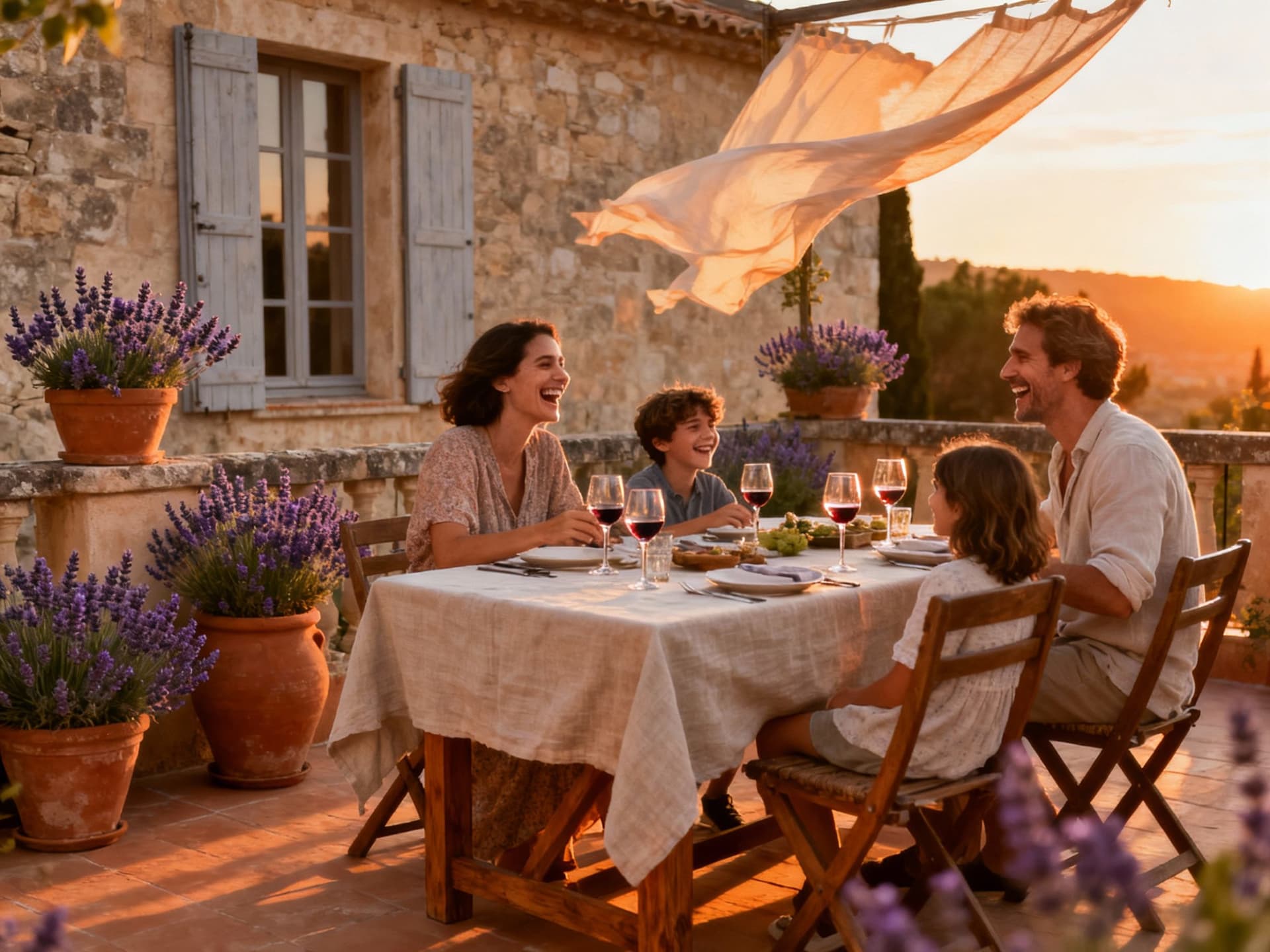
Your lifestyle brief must inform your process. Official data point to a market that stabilised through late 2024 and began to show modest growth in 2025, driven by renewed transaction activity and easing financing conditions. That context matters: in a market returning to life, timing and local expertise determine whether you capture lifestyle value or simply pay for headline desirability. An agent attuned to neighbourhood cadence will prioritise walkability, morning light and proximity to markets rather than a raw price comparison alone.
Property types and how they shape daily life
Stone houses with shutters on a narrow Provençal street offer a different set of pleasures and maintenance needs than a Haussmannian apartment with high ceilings and mouldings. A town house demands stewardship — garden tending, boiler checks — which becomes part of the rhythm of life, while an apartment near a marché reduces weekend logistics and increases social spontaneity. Choose a type that compliments the life you intend to lead: restored provenance for permanence, or compact flat for an urban social calendar.
Working with local experts who understand lifestyle value
- Steps an agency should take to match lifestyle with asset: 1. Conduct a walkability audit that scores morning markets, transport and cafés. 2. Vet neighbourhood provenance—architecture, conservation area rules and restoration history. 3. Arrange off‑market viewings with homeowners who can describe day‑to‑day life. 4. Provide seasonally adjusted valuation—how a place breathes in summer and winter. 5. Recommend trusted local artisans and property managers for stewardship.
Insider knowledge: what expats say and small truths that matter
Expats often report the same surprise: the life you love in France is local, not national. It is the florist who knows your name, the boulanger who times your baguette, the municipal fête that marks the year. Practicalities — waste collection schedules, market days, parking rules — shape the enjoyment of a property far more than a glossy facade. These small civic rhythms are the true measures of compatibility.
Language, community and integration
You do not need fluent French to buy, but basic phrases transform ordinary encounters and invite community. Learn market pleasantries and ask neighbours about local fêtes; these are the informal gateways into parish life and the best sources of maintenance referrals. Many towns have active anglophone networks, yet investors who attempt to replicate an expat bubble often miss the everyday warmth of local relationships.
Long‑term stewardship and how lifestyle affects value
Buying in France is often the first step in a longer conversation about stewardship. A well‑maintained courtyard, sympathetic restoration of shutters, and investments in thermal efficiency preserve both the daily pleasure and the asset’s desirability. Consider how your intended use — primary home, seasonal retreat or rental — will interact with local rules and the seasonal pulse of the neighbourhood.
- Red flags local buyers watch for: - Persistent damp in basements despite surface repairs - Unusual ground‑water history near rivers or canals - Over‑reliance on tourist footfall for rental income - Lack of approved plans for listed façades - Neighbourhood decline signalled by long‑term shop vacancies
If the life you picture includes market mornings, evening walks along a river and a nearby café where you become a regular, then the next step is concrete: visit outside high season, request local utility and maintenance records, and insist on a neighbourhood‑led valuation. Work with an agent who can show you how a place feels across seasons and who will prioritise lived qualities over headline metrics. That is how you convert a postcard into a durable, lived life.
Conclusion: France rewards patience and local attention. Markets have stabilised and begun to show modest growth in 2025, but the true advantage lies in selecting neighbourhoods where daily life aligns with your long‑term stewardship. Begin with lifestyle—mornings at the marché, evenings at a local table—and let local expertise translate that desire into a property whose value is measured by both provenance and everyday joy.
Relocating from London to Mallorca in 2014, I guide UK buyers through cross-border investment and tax considerations. I specialise in provenance, design integrity, and long-term value.