Malta: Lifestyle First, Market Wisdom Second
A lifestyle-first look at Malta: what daily life actually feels like, where demand is concentrated and the practical checks that preserve value.
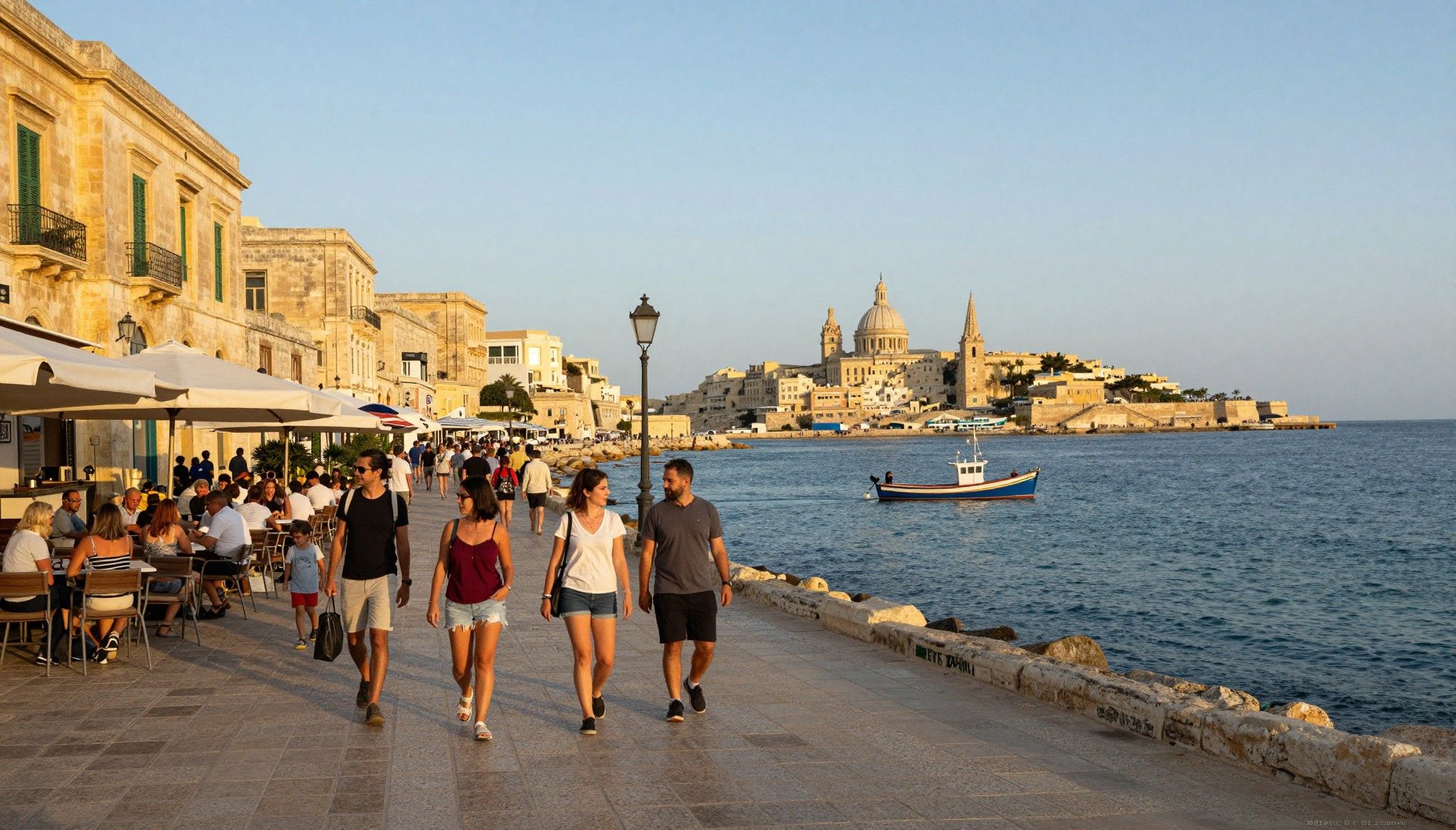
Imagine waking to a narrow limestone lane in Mdina, the air warmed by sun and baked bread, then catching a ferry to Sliema for espresso on the seafront. Malta compresses history, sea and quotidian elegance into short walks and longer conversations. For many international buyers the island’s compact scale is the draw: every day feels curated, with distinct neighbourhood personalities and immediate access to Mediterranean light. Yet desire and due diligence live together — lifestyle must be measured against a tight market where demand, heritage controls and seasonal rhythms shape value.
Living the Malta Life
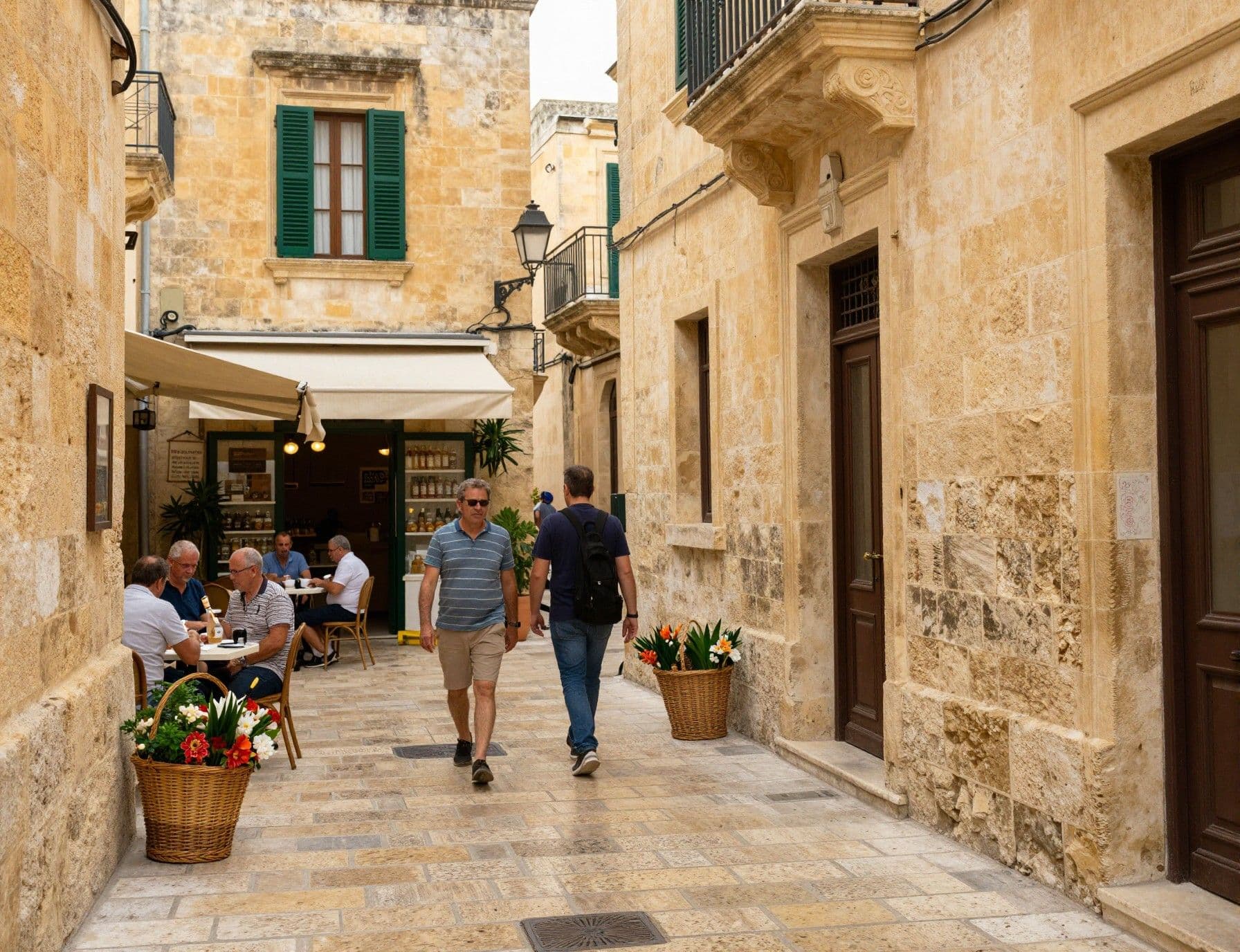
Streets in Malta are stage and living room; a morning passeggiata can begin at a fish market and end on a terrace overlooking Marsamxett Harbour. Local rhythm is measured by church bells, market days and the cadence of cafés on Tower Road in Sliema. English is an official language and widely used in commerce, which eases practical life for many internationals but does not dilute Maltese custom: neighbours know one another, and small courtyards and communal stairwells remain places of exchange. For buyers this intimacy translates to being part of a neighbourhood quickly — and to responsibilities towards a fragile urban fabric.
Valletta, Sliema and St Julian’s — three faces of the coast
Valletta offers a concentrated, ceremonial life: grand townhouses, baroque façades and the slow ritual of museum openings and harbour light. Sliema presents a more modern, lived-in promenade with boutiques, cafes and residential towers that look across to the capital. St Julian’s, especially Balluta Bay and Portomaso, blends seaside apartment living with a lively restaurant scene and, at times, intense summer animation. Each place delivers a distinct daily tempo; choosing between them is less about status and more about how you prefer to spend ordinary weekdays and long weekends.
Food, markets and the social calendar
Weekends in Malta pivot around markets and the sea: Marsaxlokk’s fish market remains a reliable Saturday ritual while small pastizzerias supply morning pilgrims. Evenings favour small plates — lampuki pie when in season, rabbit stews in winter — and terraces that catch the breeze. Cultural events, from the Valletta International Baroque Festival to village festas, provide seasonal texture and make every year feel stitched with local rituals. For buyers, proximity to these everyday pleasures often outweighs headline-view metrics.
- Lifestyle highlights to look for when choosing a neighbourhood
- Morning espresso on Tower Road, Sliema — reliable cafés and a generous promenade
- Sunday fish market in Marsaxlokk — fresh produce and a sense of continuity
- Mdina at dusk — quiet lanes and restored townhouses with thick limestone walls
Making the Move: Practical Considerations
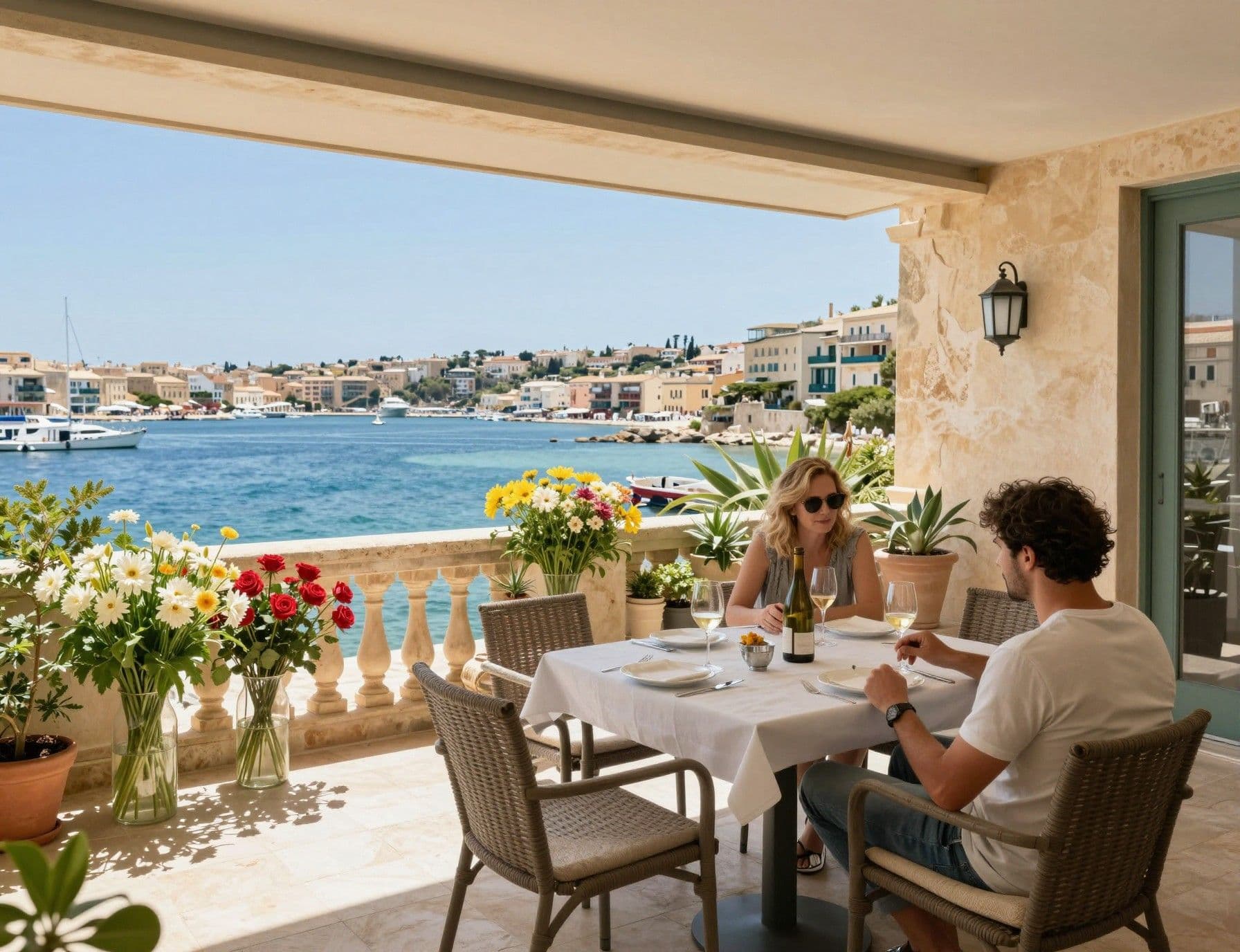
The market is compact and well-documented: Malta’s Residential Property Price Index has shown sustained increases in recent years, reflecting limited land supply and steady demand. For internationals this means prices can move quickly, particularly for restored townhouses and well-located apartments in Sliema and St Julian’s. Reliable local data, such as NSO and market reports, should inform timing and offer size expectations rather than headline comparisons with large continental markets. Buyers who move deliberately — prioritising provenance, condition and micro-location — find better value than those chasing trends.
Property styles and how they shape daily life
Traditional Maltese townhouses with internal courtyards reward those who value shaded privacy and cool interiors in summer but often need careful restoration and mechanical upgrades. Modern seafront apartments give immediate views and easy urban living but can carry higher service charges and denser neighbours. Rural properties on Gozo or in Mellieħa deliver space and a different pace, ideal for families or those seeking quieter stewardship. Match property morphology to lifestyle: a courtyard house for intimate hosting, a Tigné Point apartment for harbour life, a farmhouse for garden cultivation.
Working with local experts who understand the island
A local agent who reads conservation schedules, parish festa calendars and micro-market shifts will save time and preserve value. Agencies that specialise in heritage homes understand consent requirements for listed façades; those focused on waterfront apartments know the realities of maintenance agreements and harbour views. Use advisers to translate lifestyle desires into technical checks: orientation and cross-ventilation for summer comfort, insulation choices for winter evenings, and the provenance of original features for future authenticity. Practical expertise prevents romantic missteps.
- Steps to marry lifestyle and market prudence
- Visit neighbourhoods at different times — morning market, weekday evening, weekend festival — to sense true rhythms
- Commission targeted inspections for older stone houses: structural pathologies are often hidden behind lime plaster
- Confirm service charge terms and common‑area responsibilities for apartment blocks, particularly waterfront developments
Insider Knowledge: What Expats Wish They’d Known
Expats often arrive enchanted and then discover small frictions: intermittent public transport schedules in off-peak seasons, summer crowds in tourist pockets, and parish-driven parking constraints. Integration is pragmatic — language helps, but more important is attending local events, supporting the corner bakery and learning to read the unspoken rules of shared staircases and roof terraces. Those who treat purchases as stewardship rather than short-term gain tend to weather market cycles and enjoy long-term returns in both value and community.
Cultural integration and everyday social life
Making friends in Malta usually happens through repeated local rituals: the same café table, the same Sunday market stall, a committee for a festa or conservation project. For internationals, volunteering at community events or enrolling children in local activities accelerates acceptance. Expect straightforward, warm interactions; the challenge is less language than learning the cadence of small-town civic life where neighbours share obligations as well as conviviality.
Long-term lifestyle and portfolio thinking
Malta’s appeal — scale, climate and legal familiarity for English speakers — supports both lifestyle and investment aims, but buyers should think in decades. Heritage homes often require an initial outlay for sympathetic restoration; the result is provenance that resists commodification. Apartments in prime corridors deliver liquidity and rental appeal for seasonal markets. Build a plan that balances immediate life (where you will live, how you will entertain) with stewardship: maintenance budgets, conservation consent and a horizon for capital appreciation.
- Red flags and practical cautions
- Uncertain service charge governance in newer developments — request audited statements and reserve policies
- Superficial restorations that hide damp or structural issues behind fresh lime render
- Assuming waterfront always equals better value — micro‑orientation, views and access vary greatly
If Malta has a single advantage it is immediacy: the sea, the market and a neighbourhood culture are minutes, not hours, away. Begin there and let the practicalities follow; secure local expertise that interprets data into everyday living rather than allowing headlines to dictate decisions. An agent who understands both architectural provenance and the cadence of local life will guide you to properties that are worth living in and worth holding.
Conclusion: fall in love with the place first, then purchase with care. Start by spending real days in the neighbourhoods that call to you, commission targeted inspections that respect material and history, and work with advisers who prize stewardship. When lifestyle, architecture and diligent local expertise align, Malta offers a compact, luminous life that rewards patience and respect.
Relocating from London to Mallorca in 2014, I guide UK buyers through cross-border investment and tax considerations. I specialise in provenance, design integrity, and long-term value.